

That grinding noise during the spin cycle. The faint smell of something burning near the laundry room. Clothes coming out soaking wet even after a full wash. Any one of these can stop you cold and send you straight to Google at 10 PM wondering if your washer is done for.
Here’s the honest answer: those symptoms don’t automatically mean you need a new motor. But they do mean something is wrong, and the motor is one of the most likely culprits. Knowing which signs point specifically to the motor, versus a belt, a bearing, or a control board, can save you from either overpaying for a diagnosis or replacing a machine that only needed a $60 part.
I’ve been diagnosing washers in Greenville and across the Upstate for years. This guide walks you through the clearest warning signs of a failing washer motor, what each one usually means mechanically, and what your realistic options are when the time comes to decide.
Key Takeaways
- Burning smell is the most urgent sign. A hot or acrid smell during or after a cycle often means the motor windings are overheating. Stop the machine immediately.
- Humming without movement means the motor is trying but failing. This is different from a completely dead machine and points directly to the motor or its starting capacitor.
- Weak or no spin can be the motor, but check the belt and lid switch first. Both are cheaper fixes and worth ruling out before assuming the worst.
- Grinding or rumbling during agitation usually points to bearings, not the motor itself. The two are often confused, and bearings are typically less expensive to replace.
- Tripping the breaker repeatedly is a red flag. A motor drawing too much current is failing internally and needs professional diagnosis.
- Motor replacement costs range from $150 to $400 in parts and labor. Whether that’s worth it depends on the age of your machine and what else might be wearing out.
- A tech can confirm motor failure in one visit. Don’t replace parts by guessing. A proper diagnosis saves money.
What the Washer Motor Actually Does
Before you can read the symptoms, it helps to understand what you’re dealing with.
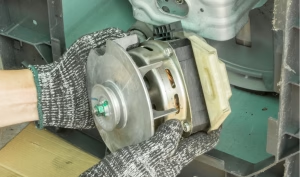
The motor is the muscle of your washing machine. It drives the drum or agitator during the wash cycle and powers the drum up to spin speed to extract water. In older top-load machines, the motor connects to the drum through a belt and transmission. In most modern direct-drive top-loaders and front-loaders, the motor connects more directly, which means fewer parts between the motor and the drum but also less tolerance for motor wear.
When the motor starts failing, it usually doesn’t quit all at once. It degrades. You’ll see it in the symptoms before the machine stops working entirely, which is exactly why catching it early matters.
The Clearest Signs Your Washer Motor Is Failing
These are the symptoms I see most often in the field. Some are obvious. Others get misread as something else. Here’s what each one actually tells you.
1. You Smell Something Burning
This is the one that should make you stop the machine immediately.
A burning smell during or right after a wash cycle almost always means heat is building up somewhere it shouldn’t. With the motor, that heat comes from the windings, the copper coils inside the motor that generate the electromagnetic force to spin the drum. When those windings start to fail, they overheat and burn off their insulation coating. That’s the acrid, electrical smell you’re noticing.
Don’t ignore this one. Running a motor past this point can cause it to seize completely, and in rare cases, it creates a fire risk.
The smell can also come from a drive belt that’s slipping or burning against a pulley, so it’s not always the motor. But either way, a burning smell is a “stop and call a tech” situation, not a “let’s run one more load” situation.
2. The Machine Hums but the Drum Doesn’t Move
You start a cycle, you hear the motor trying, but nothing spins. That humming sound is the motor drawing power and attempting to run, but something is preventing it from turning.
This symptom points to one of two things:
- A failed starting capacitor. The capacitor gives the motor the initial burst of power it needs to overcome inertia and start spinning. When it fails, the motor hums but can’t get going. The good news: a capacitor is a relatively inexpensive fix compared to a full motor replacement.
- A seized motor. If the motor windings have burned out or the internal bearings have locked up, the motor physically can’t turn. This is the more serious scenario and typically means motor replacement.
A tech can tell the difference between these two in minutes with a multimeter.
3. The Drum Spins Weakly or Won’t Reach Full Spin Speed
Your clothes are coming out soaking wet. The machine completes the cycle, but the spin clearly isn’t doing its job.
Weak spin is one of those symptoms that gets blamed on the motor when it’s often something else entirely. Before assuming the motor is the problem, check these first:
- Lid switch or door latch: On top-loaders, the machine won’t spin at full speed if the lid switch thinks the lid is open. A failed switch is a common and inexpensive fix.
- Drive belt: On belt-driven machines, a worn or broken belt will cause weak spin or no spin at all. You can often hear a slipping belt as a squealing sound during the spin cycle.
- Motor control board: On newer machines, a faulty control board can limit the motor’s speed even when the motor itself is fine.
If all of those check out and the drum still won’t reach spin speed, the motor is the next logical suspect. A failing motor may run at low RPM but lack the torque to ramp up to the 800-1,200 RPM that a proper spin cycle requires.
4. Loud Grinding or Rumbling During Agitation
This one gets misidentified as a motor problem constantly, and I understand why. The noise is coming from somewhere deep in the machine and it sounds mechanical and serious.
In most cases, that grinding or rumbling is actually the drum bearings, not the motor itself. The bearings support the drum and allow it to spin smoothly. When they wear out, you get metal-on-metal contact that sounds a lot like a failing motor.
How to tell the difference: Spin the drum by hand with the machine off. If you hear or feel grinding, roughness, or resistance, it’s almost certainly the bearings. A failing motor, by contrast, will usually be quiet when the machine is off and only show symptoms when it’s running under load.
Bearings are worth replacing if the machine is otherwise in good shape. We have a full guide on how to replace a bearing on a washing machine if you want to understand what that repair involves.
5. The Machine Trips the Circuit Breaker
Your washer keeps tripping the breaker, usually during the spin cycle when the motor is working hardest.
A healthy motor draws a predictable amount of current. When the motor’s internal windings start to short out or the motor is struggling against a mechanical problem, it draws more current than the circuit can handle. The breaker trips as a safety response.
This symptom by itself doesn’t confirm the motor is bad; a faulty capacitor, a seized pump, or even an overloaded drum can cause the same thing. But repeated breaker trips during the spin cycle, with no other obvious cause, put the motor high on the suspect list.
6. The Machine Stops Mid-Cycle and Won’t Restart
The washer quits partway through a cycle. You reset it, it starts again, and then quits again in the same place.
Modern washers have thermal protection built into the motor. When the motor overheats, a thermal overload switch cuts power to protect it. The machine will restart once the motor cools down, which is why this symptom often looks intermittent.
If your washer is stopping mid-cycle repeatedly and there’s no error code pointing to a drain or door issue, thermal overload is a strong possibility. It means the motor is working too hard to maintain normal operating temperature, which is a sign of internal wear.
Motor Failure vs. Other Common Washer Problems
One of the most frustrating parts of diagnosing a washer is that several different components can produce nearly identical symptoms. Here’s a quick reference to help you sort out what you’re likely dealing with before calling a tech.
| Symptom | Likely Cause | Severity |
|---|---|---|
| Burning smell | Motor windings or drive belt | High, stop immediately |
| Hums but won’t spin | Capacitor or seized motor | Medium to High |
| Weak spin, wet clothes | Lid switch, belt, or motor | Low to Medium |
| Grinding during agitation | Drum bearings | Medium |
| Trips circuit breaker | Motor drawing excess current | High |
| Stops mid-cycle, restarts later | Thermal overload in motor | Medium |
| Won’t start at all | Lid switch, control board, or motor | Varies |
| Loud banging during spin | Unbalanced load or worn shock absorbers | Low |
The table shows why a proper diagnosis matters. Banging during spin, for example, is almost never the motor. Wet clothes after a full cycle could be five different things. Jumping straight to “I need a new motor” without ruling out cheaper parts is one of the most common ways homeowners end up overspending on washer repairs.
If you’re seeing common washer repair problems across multiple symptoms at once, that’s usually a sign the machine has some age on it and may need a broader assessment.
Should You Repair or Replace?
Once you’ve confirmed the motor is the problem, the next question is whether replacing it makes financial sense. Here’s how I think about it.
The 50% Rule
If the repair cost is more than 50% of what a comparable new machine costs, replacement is usually the smarter move. A washer motor replacement typically runs between $150 and $400 depending on the brand, model, and whether it’s a standard motor or a direct-drive unit. Entry-level washers can be purchased new for $500 to $700, which means motor replacement on an older machine can eat up a significant chunk of replacement cost.
Factor in the Machine’s Age
- Under 5 years old: Repair almost always makes sense. The machine has plenty of life left, and a new motor should last another 8-10 years.
- 5-10 years old: Evaluate the overall condition. If the bearings, suspension, and control board are all in good shape, repair is still reasonable.
- Over 10 years old: Be cautious. Replacing the motor on a machine that’s already past its prime means you may be paying for a repair that buys you 12-18 months before something else fails.
What’s the Brand and Model?
Some brands have motors that are widely available and inexpensive. Others require proprietary parts that drive the cost up significantly. A tech can give you a parts estimate before you commit to anything.
The honest bottom line: Don’t make this decision based on symptoms alone. Get a confirmed diagnosis first, then weigh the repair cost against the machine’s age and replacement cost. That’s the only way to make a decision you won’t regret.
Frequently Asked Questions
How long does a washing machine motor typically last?
Most washer motors are built to last 10-15 years under normal use. Heavy loads, frequent overloading, and running the machine without proper maintenance can shorten that lifespan considerably. If your machine is under 10 years old and showing motor symptoms, repair is almost always worth pursuing.
Can I test the motor myself without a multimeter?
You can do a basic visual and sensory check. Look for burn marks or a melted smell near the motor housing. Spin the drum by hand to feel for resistance or grinding. Try running a short cycle and note whether the machine hums without spinning or trips the breaker. These observations give a tech useful information, but confirming motor failure definitively requires electrical testing with a multimeter.
Is a washing machine motor expensive to replace?
Motor replacement typically costs between $150 and $400 for parts and labor, depending on the brand and motor type. Direct-drive motors on newer front-loaders tend to be on the higher end. Some brands, like Whirlpool and GE, have motors that are more readily available and affordable than others.
Could it be the motor control board instead of the motor?
Yes, and this is a common misdiagnosis. The motor control board regulates power to the motor, and a faulty board can cause symptoms that look exactly like motor failure: no spin, weak spin, or the machine stopping mid-cycle. A control board replacement is often less expensive than a motor replacement, so it’s worth ruling out before committing to a motor swap.
What should I do if my washer smells like burning?
Stop the machine immediately and unplug it. Don’t run another cycle until a technician has inspected it. A burning smell can indicate motor winding failure, a slipping belt, or an electrical fault, all of which carry a risk of further damage or, in rare cases, fire. This is not a “wait and see” situation.
How do I know if it’s the bearings or the motor making noise?
Spin the drum by hand with the machine unplugged. Bearings will feel rough or gritty and may produce a grinding or rumbling sound even when the machine is off. A motor problem, by contrast, will typically only show up when the machine is running under load. If the drum spins smoothly by hand but the machine grinds during a cycle, the motor or its internal components are more likely the cause.
Get a Diagnosis You Can Trust
Washer motor problems don’t fix themselves, and running a failing motor longer usually means a more expensive repair when you finally do call someone.
If you’re in Greenville or anywhere across the Upstate and you’re seeing any of the symptoms above, the team at Appliance GrandMasters can diagnose the problem in a single visit. We’ll tell you exactly what’s wrong, what it’ll cost to fix, and whether the repair makes sense given the age and condition of your machine. No pressure, no guesswork.
Schedule your washer repair appointment online or give us a call. We carry OEM parts for all major brands and back our labor with a 90-day warranty.