

You walk into the laundry room mid-cycle and something is off. Maybe there’s a high-pitched squeal coming from the machine. Maybe there’s a faint burning rubber smell you’ve never noticed before. Or maybe the drum just stopped moving while the motor keeps humming along like nothing happened.
Any one of those signs can send a homeowner straight to Google at the worst possible time.
Here’s the good news: a failing washing machine belt is one of the more manageable washer repairs. The bad news is that belt symptoms overlap with other failures, and continuing to run the machine on a bad belt can turn a straightforward fix into a more expensive one.
This guide focuses on three things:
-
Identifying the symptom cluster that points to a belt problem, not just a single noise
-
Separating belt issues from lookalike failures like bad bearings, motor trouble, or a drain problem
-
Knowing when to stop using the washer and when a call to a technician makes more sense than another test cycle
Key Takeaways
-
Squeal during spin or agitation is one of the earliest belt warning signs, caused by the belt slipping on the pulley.
-
A burning rubber smell is a more urgent signal, indicating the belt is generating excess friction and may be close to complete failure.
-
Weak, intermittent, or no spin often means the belt is worn, stretched, or has already snapped.
-
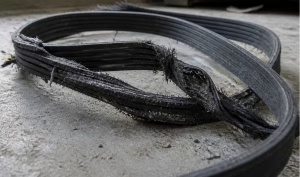
Visible wear matters – cracks, fraying, glazing, or shiny worn spots on the belt confirm it needs replacement.
-
Belt repairs are typically less expensive than motor or bearing repairs, with average belt replacement costs around $140 to $150 compared to much higher motor or bearing jobs.
-
Stop using the washer immediately if you smell burning rubber or the drum stops moving while the motor is still running.
-
One symptom alone is not enough to confirm a belt problem – the pattern of symptoms together is what points to the right diagnosis.
The Most Common Signs of a Failing Washing Machine Belt
Belts don’t usually fail all at once. Most of the time, they give you a warning period – a few cycles where something sounds or smells slightly wrong before the machine stops working altogether. Here are the five signs that most consistently point to a belt problem.
-
The drum won’t spin, or spins weakly This is the most obvious symptom. If the motor is running but the drum isn’t moving, or if it barely turns under a normal load, the belt is either broken, slipped off the pulley, or too stretched to transfer power. A drum that spins fine when empty but struggles with a full load of towels is a classic early-stage warning.
-
High-pitched squealing during agitation or spin A worn or frayed belt squeals as it slips on the pulleys – most noticeable at the start of the spin cycle when tension peaks. If it’s getting worse, take it seriously.
-
A burning rubber smell during operation A slipping or misaligned belt produces a burning rubber odor while the washer runs – the most urgent symptom on this list. Smell it? Stop the machine. Continued use risks damaging the pulleys or motor.
-
Intermittent spinning – works sometimes, not others If the washer handles a light cycle but struggles with a heavier load, the belt is likely slipping – losing tension, but not fully broken yet.
-
Visible wear on the belt itself If you can access the belt on your model, look for cracks, fraying, glazing, or shiny worn spots. Any of those signs mean the belt is past its reliable service life. Drive belts typically last around five years under normal use. Age alone is worth factoring in. For context on how overloading and other common habits accelerate wear, this breakdown of habits that damage washers faster than expected is worth a read.
What These Symptoms Usually Mean
The drive belt connects the motor to the drum or transmission, depending on your washer’s design. When the belt is working correctly, that connection is smooth and consistent. When it starts to fail, the breakdown in power transfer shows up in predictable ways.
Understanding what each symptom usually points to helps you read the situation more accurately instead of guessing.
| Symptom | What it usually means |
|---|---|
| Drum won’t spin, motor still running | Belt is broken or has slipped off the pulley |
| Squealing at start of spin | Belt is slipping on the pulley due to wear or looseness |
| Burning rubber smell | Belt is generating friction from slipping or misalignment |
| Spins fine when empty, struggles with a full load | Belt has lost tension and is slipping under load |
| Intermittent spin failures | Belt is partially worn, may be close to snapping |
| Visible cracks, fraying, or glazing | Belt is past its service life regardless of current symptoms |
One symptom alone can point in several directions. A burning smell plus spin failure together is far more telling than either sign on its own – the pattern matters more than a single bad cycle.
Belt Issue or Something Else? How to Avoid the Most Common Misdiagnoses
Belt symptoms overlap with several other washer failures, and misdiagnosing the problem is one of the most common reasons a repair ends up costing more than it should. If your machine is stopping mid-cycle but you’re not hearing a squeal or smelling rubber, for example, the cause is more likely a lid switch, drain issue, or control board fault than a belt. Here’s how to tell the difference.
| Problem | What it sounds and feels like | Key difference from a belt issue |
|---|---|---|
| Worn bearings | Loud grinding or rumbling during spin, strong vibration, rough drum rotation | Grinding is deeper and more mechanical than belt squeal; no rubber smell |
| Motor failure | Overheating, difficulty reaching speed, electrical burning smell | Smell is more acrid and electrical, not rubber; motor may hum loudly or not start |
| Drain pump issue | Spin cycle stops but no squeal or rubber smell; water may not drain fully | No burning smell; drum may be fine but cycle won’t complete |
| Lid switch failure | Washer won’t spin at all, no noise during spin phase | No smell, no squeal; machine may fill and agitate normally but stop before spin |
| Motor coupler failure | Similar to belt failure on some models; drum won’t spin, motor runs | More common on direct-drive models that don’t use a belt at all |
The most important distinction: a burning rubber smell almost always points to belt or pulley friction. Bearing and motor failures produce mechanical noise and heat, but the rubber smell is specific enough that it narrows the diagnosis significantly.
Grinding instead of squealing, or a sharp electrical smell instead of rubber, points further down the drive system than the belt.
When to Stop Using the Washer Right Away
Stop using the washer immediately if any of these apply. Continuing to run the machine on a failing belt risks damaging the pulleys, overloading the motor, and turning a straightforward repair into a more expensive one.
-
You smell burning rubber during or after a cycle
-
The drum is not spinning but the motor is clearly still running
-
The machine is squealing badly and the sound is getting worse with each cycle
-
The drum spins erratically or stops mid-cycle under a normal load
-
The washer is vibrating more than usual and the spin feels rough or uneven
A slipping belt generates heat that damages the pulleys and stresses the motor. The longer it runs, the more components get pulled into the problem.
Mild, occasional squealing with no smell? Reduce load size and watch it for a cycle. Smelling rubber? Stop the machine before the next one.
Safe DIY Checks Before Calling a Technician
There are a few things you can check before picking up the phone, without needing to disassemble anything major. These steps help you confirm the symptom pattern and give a technician useful information when you do call. For a broader look at what’s safe to check yourself before scheduling service, see our guide to 5-minute repairs homeowners can safely do before calling a pro.
-
Unplug the washer first. No exceptions. Any inspection near the drum, motor, or belt area requires the machine to be completely powered off.
-
Think back to the last few loads. Was the machine overloaded? A single heavy item like a wet comforter or a pair of work boots can stress the drive system and accelerate belt wear. Overloading is one of the most common causes of early belt failure.
-
Check if the drum turns by hand. With the machine unplugged, try rotating the drum manually. If it turns smoothly, the drum itself is likely fine. If it’s stiff, grinds, or catches, the problem may be further into the drive system than the belt.
-
Look for visible belt access on your model. Some top-load washers allow belt inspection by removing a back panel. If you can see the belt without major disassembly, check for cracks, fraying, glazing, or looseness. If accessing it requires removing the motor or transmission housing, stop and call a technician.
-
Check your owner’s manual. The manual for your specific model will show the drive system layout and confirm whether your washer even uses a traditional belt. Some modern direct-drive models use a coupler instead, which changes the diagnosis entirely.
-
Don’t keep test-running the machine. If each cycle adds more smell, squeal, or slipping, additional cycles aren’t giving you useful information. They’re adding wear.
Is It Worth Repairing a Washer Belt?
For most homeowners, yes, a belt repair is worth doing, especially when the washer is otherwise in good condition. The part itself is inexpensive, and the labor is straightforward compared to more involved drive-system repairs. Our certified washing machine repair service in Greenville handles belt replacements alongside full diagnostics, so you’re not guessing at what else might be contributing to the problem.
Here’s how belt repair compares to other common washer fixes and the cost of replacement:
| Repair type | Typical cost range | Worth it? |
|---|---|---|
| Belt replacement | $140 to $150 | Yes, in most cases |
| Bearing repair | Higher; labor-intensive | Depends on washer age |
| Motor repair or replacement | Significantly higher | Compare carefully against machine value |
| New washing machine | $600 to $1,800 | Only if multiple systems are failing |
The real money saver is an accurate diagnosis. A belt problem is almost always worth fixing. But if the belt turns out to be a secondary symptom of a failing motor or worn-out bearings, the math changes. That’s the main reason a professional diagnosis matters before committing to any repair.
In Greenville, average washer repair costs typically run between $150 and $350, well below the cost of a replacement machine. If your washer is less than ten years old and has been reliable, a belt repair at the lower end of that range is usually the right call.
Where replacement becomes the stronger option is when the machine is older, the repair reveals additional failing components, or the total repair estimate approaches half the cost of a comparable new unit.
FAQ: Washer Belt Symptoms Homeowners Ask About Most
Can a washing machine still run with a bad belt?
Sometimes, yes, but it depends on how far the belt has worn. A stretched or partially slipping belt may still complete lighter cycles while failing under heavier loads. A fully broken belt means the drum won’t spin at all, even though the motor continues to run. Either way, running the machine on a failing belt adds wear to the pulleys and motor, so it’s worth addressing sooner rather than later.
Does a burning smell always mean the belt?
Not always, but it’s the most likely cause. A burning rubber smell during a wash cycle points strongly to belt friction from slipping or misalignment. A sharper, more electrical smell is more consistent with motor trouble. If you’re not sure which type of smell you’re dealing with, stop using the machine and have a technician check it.
Do front-load and top-load washers use belts the same way?
Not exactly. Many top-load washers use a drive belt that connects the motor to the transmission or drum. Some front-load washers also use belts, but the layout differs by model. Some modern direct-drive machines, particularly certain top-load models, skip the belt entirely and use a motor coupler instead. If you’re not sure which type you have, our breakdown of front-load vs. top-load washing machines covers the key design differences, including drive systems.
How fast can a worn belt fail completely?
It varies. A belt that’s cracking or fraying may hold up for several more cycles or snap without warning on the next heavy load. There’s no reliable way to predict the timeline once visible wear appears. If you’ve confirmed wear during an inspection, the belt should be replaced before the next use.
Is replacing a washer belt a safe DIY repair?
On some models, yes. If the belt is accessible without major disassembly and you’re comfortable following your model’s service guide, belt replacement is one of the more approachable washer repairs. On models where belt access requires removing the motor housing or transmission, it’s safer to hand that off to a technician to avoid creating a secondary problem.
Know the Pattern, Then Make the Smart Call
A failing washing machine belt usually announces itself the same way: a squeal during spin, a burning rubber smell, a drum that won’t move the way it should, or visible wear if you can get eyes on the belt directly. No single symptom is definitive on its own, but when two or three of those signs show up together, the pattern is hard to ignore.
The good news is that a belt problem is one of the more manageable washer repairs. Catching it early, before a slipping belt starts wearing the pulleys or stressing the motor, keeps the fix straightforward and the cost reasonable.
If you’ve gone through the DIY checks, the symptoms match, and you’re still not sure what you’re dealing with, that’s the right time to call.
At Appliance GrandMasters, we work on washers across Greenville and the Upstate every day. If your machine is squealing, smelling like burnt rubber, or refusing to spin properly, give us a call and we’ll help you figure out what’s actually going on before you spend money on the wrong fix.