

Some jobs you finish and go home thinking about what’s for dinner.
And then there are jobs like this one.
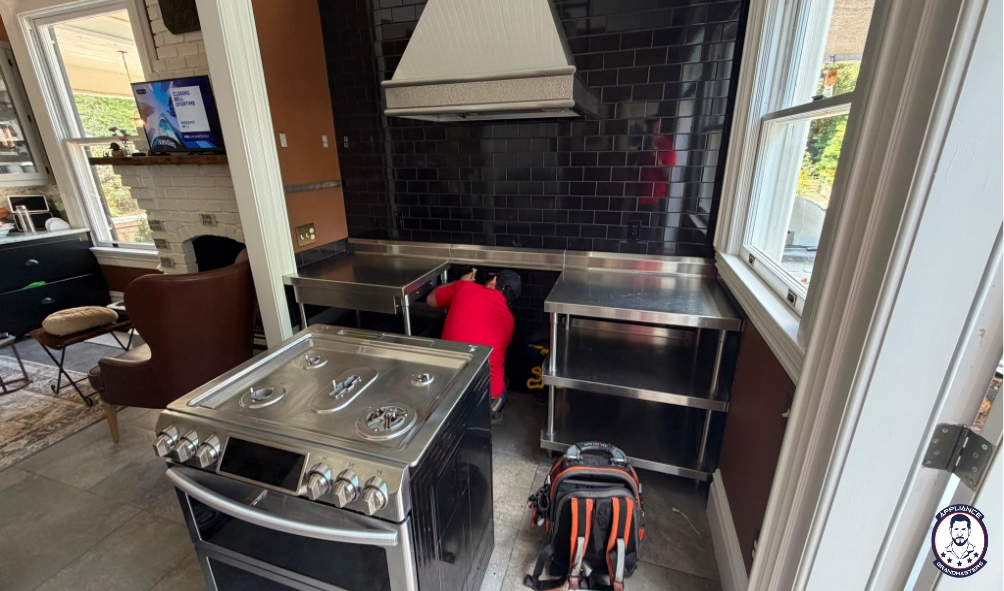
When the call came in from a homeowner in Hendersonville, North Carolina, I’ll be honest with you: I felt something I don’t usually let myself feel before a job is done. I felt excited. The customer had just taken delivery of a Lacanche range. A French-made, cast-iron-and-steel, hand-assembled, built-like-a-vault Lacanche range. And they needed it installed in a Colonial Revival home from the early 1900s. One of those beautiful, symmetrical brick houses that Hendersonville built during its railroad boom years. The town was growing fast back then, and the families who could afford it were building to last.
Two things built to last. One kitchen. Our job to make them meet.
No pressure.
Key Takeaways
- Lacanche ranges are not plug-and-play. They require precise gas, electrical, clearance, and ventilation prep before a single burner lights.
- Historic homes add a layer of complexity. Older structures need floor load assessments, updated electrical panels, and careful maneuvering through narrow, original-spec doorways.
- The right tools make the difference. Appliance dollies, manifold pressure gauges, leak detection fluid, and a calibrated level are not optional on a job like this.
- Commissioning is everything. Proper burner pressure testing and oven calibration are what separate a working range from a great one.
- Every installation gets the same care. Whether it’s a French range in a historic home or a standard range in a new build, the process and the attention don’t change.
- We serve Western North Carolina. Hendersonville, Asheville, and the surrounding mountain communities are part of our territory, and we take that seriously.
First, Let’s Talk About What a Lacanche Actually Is
Because if you haven’t heard of Lacanche, you’re not alone, and that’s okay.
Lacanche is a French range manufacturer that has been operating out of the village of Lacanche in Burgundy since 1796. That’s not a typo. Seventeen ninety-six. They were building professional-grade cooking ranges before the United States had a second president.
Today, a Lacanche range is considered one of the finest residential cooking appliances in the world. They’re made mostly from steel and cast iron, assembled by hand, and they weigh anywhere from 350 to nearly 1,000 pounds depending on the model. The one we were installing sat comfortably in the middle of that range. Which is still a lot of French cast iron to get through a 100-year-old doorway.
Here’s what makes a Lacanche installation genuinely different from a standard range swap:
- Electrical: Most models require a dedicated 240V/30A circuit. In a historic home, that often means verifying the panel can handle it.
- Gas: The connection requires a 1/2″ ID NPT gas line, and the manifold pressure has to be tested and set precisely after connection.
- Clearances: A minimum 70mm rear clearance from the wall is required for air circulation, achieved with a factory-supplied back-spacer vent.
- Ventilation: The range hood must be at least as wide as the cooking surface, ideally 6 inches wider, with sufficient CFM capacity for the BTU output.
- Floor load: The manufacturer’s own installation checklist specifically flags older homes, noting that the supporting floor structure must be assessed before installation.
- Commissioning: This is the part that separates a proper installation from a sloppy one. Every burner must be tested for correct pressure. Every oven must be calibrated. Skipping this step leads to uneven cooking temperatures and, eventually, a service call.
That last point matters a lot to me. Commissioning isn’t a bonus. It’s the job.
The House Had Something to Say About That
Hendersonville’s historic neighborhoods don’t mess around. The home we were working in was a Colonial Revival, built sometime in the early 1920s, the kind of house where the bones are solid enough to outlast everyone in the room, but the original layout wasn’t exactly designed with a 500-pound French range in mind.
The kitchen had been updated over the decades, but the structure underneath was original. That meant our first task wasn’t touching the range at all.
Assessing the Site Before Anything Moves
Before we even unloaded the truck, we walked the space. I’m talking about the full walk. Kitchen layout, doorway widths, floor condition, gas line location, electrical panel, and the exact path the range would travel from the front door to its final position.
Here’s what we found:
- Doorways: Original interior doorways in homes from this era are typically 30 to 32 inches wide. The range was wider. We had to plan the entry path carefully, removing a door and its casing temporarily to create a clean line of travel.
- Flooring: Beautiful original hardwood throughout. Not a single scratch was acceptable. We laid down appliance moving blankets and hardboard panels across the entire path before the range came off the truck.
- Gas line: The existing stub-out was in the right general area but needed to be confirmed for 1/2″ NPT compatibility and proper shutoff access.
- Electrical: The homeowner had already had a licensed electrician run a dedicated 240V/30A circuit in advance of our visit. That’s the right way to do it, and we always recommend getting that handled before installation day.
- Floor structure: We checked the subfloor around the installation area. Solid. No soft spots, no bounce. The old builders knew what they were doing.
Only after that walk-through did we go back to the truck and start unloading.
The site assessment isn’t paperwork. It’s protection. For the home, for the appliance, and for the people who live there.
Moving a Range That Weighs More Than Some Cars
This is the part of the job that separates people who do this for a living from people who tried it once and called a professional the second time.
A Lacanche range does not roll. It does not slide. It does not forgive mistakes. You move it with purpose and the right equipment. With a team that has done this enough times to communicate without raising their voices.
The Tools We Brought
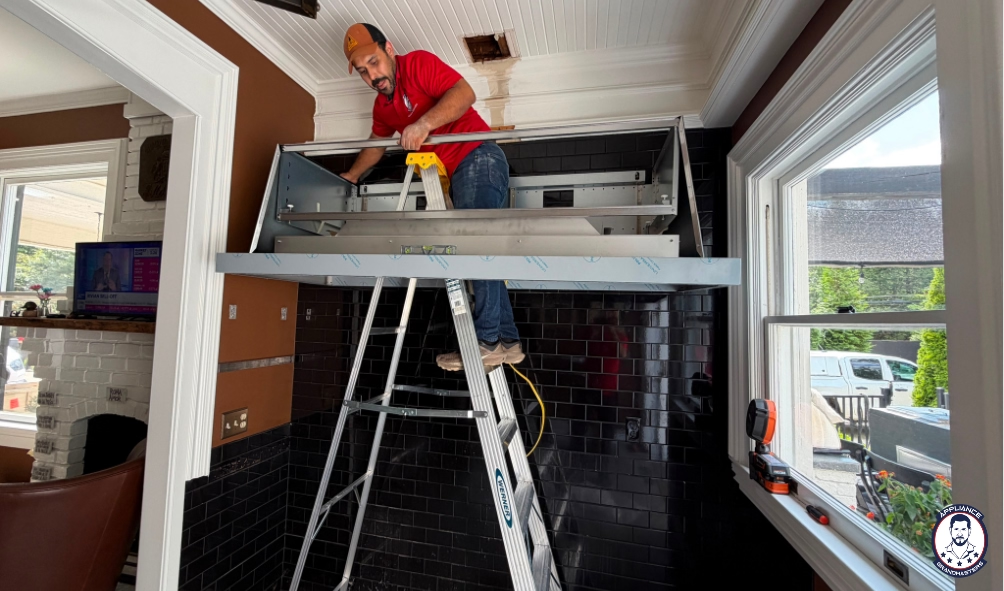
We don’t show up to a job like this with a hand truck and optimism. Here’s what was on the truck:
- Heavy-duty appliance dolly rated well above the range’s weight, with non-marring rubber feet
- Furniture sliders and hardboard panels to protect the hardwood floors during the final positioning
- Moving straps and blankets for securing and cushioning during transport from the truck
- Pipe wrenches and adjustable wrenches for the gas connection work
- Manifold pressure gauge for testing gas pressure at the connection point after hookup
- Leak detection solution applied to every gas fitting before the range is considered connected
- 4-foot level because a range that isn’t perfectly level doesn’t cook evenly, and on an old floor, you earn that level reading
- Adjustable legs (factory-supplied on the Lacanche) to compensate for any floor variation
- Multimeter for verifying the electrical circuit before connection
The range came off the truck on the dolly, moved across the protected floor path, and was walked into position with two people and a lot of patience. There’s a rhythm to moving something that heavy through a space that wasn’t designed for it. You don’t rush it. You talk through every corner.
Once it was in the kitchen, the real work started.
Making the Connections: Gas, Electrical, and Getting It Level
This is where the technical side of the job takes over, and I want to be transparent about what that actually looks like, because “installation” can mean a lot of things depending on who’s doing it.
Gas Connection
The Lacanche requires a 1/2″ ID NPT gas connection. We confirmed the existing stub-out matched, attached the flexible gas connector, and then did something that is non-negotiable on every gas appliance we install: we tested every single fitting with leak detection solution.
Every. Single. One.
You brush it on, you wait, and you watch for bubbles. No bubbles means no leak. It’s not glamorous. It doesn’t require a fancy tool. But it’s the step that matters most, and it’s the step that gets skipped when someone is in a hurry.
After confirming zero leaks, we tested the manifold pressure with a gauge to verify the supply pressure matched the range’s specifications. On a Lacanche, this matters more than on a standard range because the burners are calibrated to perform at a specific pressure. Too low and the simmer burner won’t hold a true simmer. Too high and you’re scorching food on a range that cost more than most used cars. Neither is acceptable.
Electrical Connection
The dedicated 240V/30A circuit was already in place. We verified the voltage at the outlet with a multimeter before making the connection. Then we connected the range per the manufacturer’s wiring specifications, confirmed the ground, and tested the circuit breaker response.
Leveling
Old floors are rarely perfectly flat. That’s not a flaw; it’s character. But a range that’s off-level by even a degree will have liquids pooling to one side of a pan, and the oven temperature distribution will suffer.
The Lacanche’s factory-supplied adjustable legs are designed for exactly this situation. We used the 4-foot level across both axes, adjusted each leg individually, and got the range to within a hair of perfectly level before tightening everything down.
It took longer than it sounds. It was worth every minute.
Commissioning: The Step That Actually Makes It Work
I want to spend a moment here because this is the piece of a Lacanche installation that most people don’t know about, and it’s the piece that matters most after everything is physically in place.
Commissioning is the process of testing and calibrating the appliance after it’s connected. The manufacturer’s own documentation is blunt about it. Failure to commission correctly results in burner underperformance and inconsistent oven temperatures. It’s not a suggestion. It’s a warning.
Here’s what commissioning looked like on this job:
- Burner ignition test: Every burner, one at a time. We confirmed ignition, flame stability, and the ability to hold a low simmer without the flame dying out.
- Pressure verification at each burner: Using the manifold gauge, we confirmed that the supply pressure was consistent across the cooking surface.
- Oven temperature calibration: We ran the oven up to temperature and verified the actual internal temperature against the set point. A Lacanche oven is built to hold temperature precisely. If it’s not calibrated, it won’t.
- Simmer oven check (on models equipped with one): Verified the lower simmer oven held its target temperature range consistently.
- Final leak check: One more pass with the detection solution on every gas fitting. Belt and suspenders. Always.
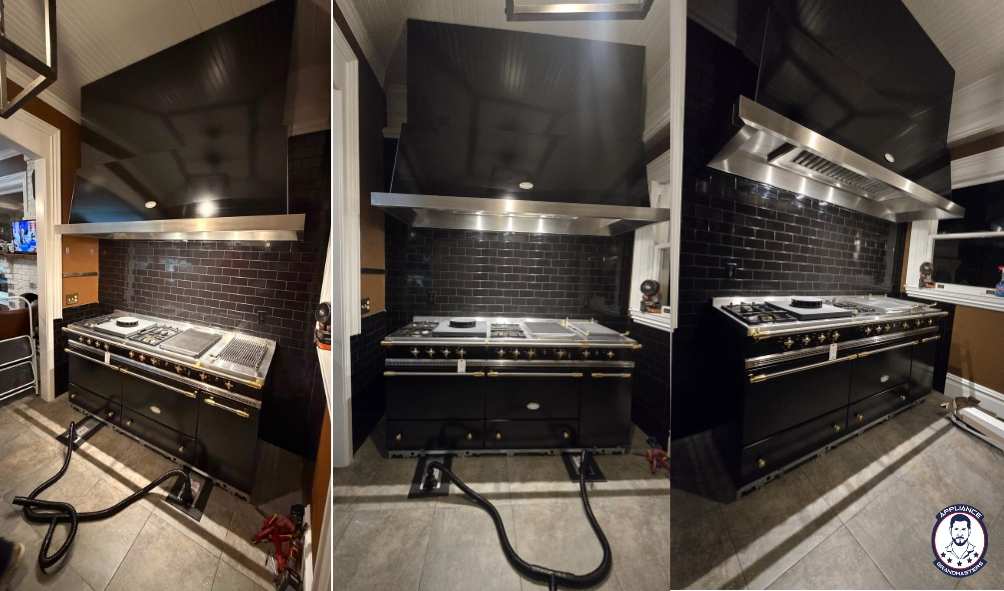
By the time we were done commissioning, the range wasn’t just installed. It was ready to cook.
Why This Job Matters to Us
I want to be clear about something: we didn’t write this story to sell you a Lacanche installation. We wrote it because this job is a good example of what Appliance GrandMasters actually does, and why we take every installation seriously, whether it’s a $500 range in a rental property or a $15,000 French range in a century-old home.
The care is the same. The process is the same. The standards don’t move based on the price tag.
We’ve been serving the Western North Carolina and Upstate South Carolina region long enough to know that the mountain communities around Hendersonville, Asheville, and Brevard are full of homes with character, kitchens with history, and homeowners who care deeply about both. They don’t want someone who shows up with a hand truck and a 30-minute window. They want someone who walks the space first, protects the floors, and tests the gas twice. Someone who doesn’t leave until the oven temperature is calibrated.
That’s us. That’s what we do on every job.
And I’ll be honest with you: standing in that Hendersonville kitchen, watching the burners light one by one on that Lacanche range, in a house that’s been standing since before my grandparents were born, was one of those moments in this work that you don’t forget.
Some jobs you finish and go home thinking about what’s for dinner.
This was not one of those jobs.
This was one of those jobs you go home thinking about for a while.
Frequently Asked Questions
Do I need a licensed technician to install a Lacanche range?
Yes. Lacanche’s own installation documentation requires that all gas and electrical work be performed by a qualified, licensed technician. In North Carolina, gas appliance connections must comply with the National Fuel Gas Code (ANSI Z223.1/NFPA 54) and local codes. This is not a DIY project. Attempting it without proper credentials can void the warranty and create serious safety risks.
How long does a Lacanche installation take?
A proper installation, including site assessment, uncrating, positioning, gas and electrical connection, leveling, and full commissioning, typically takes four to six hours. Jobs in historic homes with narrow doorways or older utility infrastructure can run longer. We never rush the commissioning phase.
Can a Lacanche range be installed in an older home with original hardwood floors?
Yes, with the right preparation. We protect floors with moving blankets and hardboard panels along the entire travel path before the range moves an inch. The adjustable factory legs also allow for fine-leveling on floors that have settled over the decades, which is common in homes from the early 1900s.
What should I do before the installation team arrives?
The most important step is having a licensed electrician run a dedicated 240V/30A circuit to the range location before installation day. You should also confirm that your gas supply line is 1/2″ NPT and that a manual shutoff valve is accessible near the range location. Clearing the travel path from the entry point to the kitchen saves significant time.
Does Appliance GrandMasters install ranges outside of Greenville, SC?
Yes. We serve Western North Carolina, including Hendersonville, Asheville, Brevard, and surrounding communities, in addition to the Upstate South Carolina market. If you have a premium appliance that needs careful, professional installation, reach out and we’ll talk through the logistics.
What makes a Lacanche installation different from a standard range installation?
The weight, the commissioning requirements, and the precision involved at every step. A standard range swap is relatively straightforward. A Lacanche installation involves floor load assessment, precise gas pressure testing and calibration, multi-axis leveling on adjustable legs, and a full commissioning process that verifies every burner and oven function before the job is considered complete.
Is commissioning really necessary, or is it just extra time on the clock?
It’s absolutely necessary. The manufacturer’s documentation states directly that improper commissioning leads to burner over- or underperformance and inconsistent oven temperatures. On a range at this price point, that’s not an acceptable outcome. We commission every gas appliance we install, Lacanche or otherwise.