
And here in Greenville, SC, sealed system issues show up more often than people think — not because fridges are poorly made, but because our climate throws extra challenges at them.
I’ve repaired sealed systems all across the Upstate — Greenville, Greer, Taylors, Simpsonville, Easley — and one thing is consistent: humidity and heat stress sealed systems more here than in many other parts of the country. If you’ve ever wondered why sealed system repairs are complex or why your fridge seems to “work hard” during long muggy stretches, this guide breaks everything down in plain, honest language.
Let’s explore what sealed system issues look like, why they happen so often here, and what you can actually do to prevent major repair bills.
Greenville’s weather looks calm on paper — four seasons, mild winters. But the real story is moisture. Our humidity levels and dew points create the perfect storm for sealed system strain.
From late May through mid-September, highs stay above 82°F — July averages 89°F. When the air around the fridge is hot, the condenser can’t release heat efficiently. So the compressor works longer… and harder. I’ve seen compressors so hot you can’t touch the dome for more than a second.
High humidity sneaks into your fridge every time you open the door. Warm, wet air enters, and the sealed system has to remove:
This turns the evaporator coil into an ice magnet. When coils frost over, they stop absorbing heat — the sealed system’s job becomes impossible.
And that’s only the beginning.
Moist air → frost on coils → coils insulated → temperatures rise inside fridge/freezer → sealed system pressures drop → compressor draws less current → food warms.
Non-specialist techs often misdiagnose this as a “bad compressor” because the numbers look similar.
If moisture sneaks inside the sealed system (through a leak or improper repair), it chemically reacts with refrigerant and oil to create acid. That acid eats internal copper parts, sometimes silently, until a pinhole leak forms.
This one is extremely common in the Upstate. When humidity mixes with VOCs from cleaners, paint, furniture, or air fresheners, the combo forms organic acids that attack copper coils. They carve microscopic tunnels (ant-nest pattern) until the refrigerant escapes.
Most homeowners never see the corrosion — it happens inside the metal.
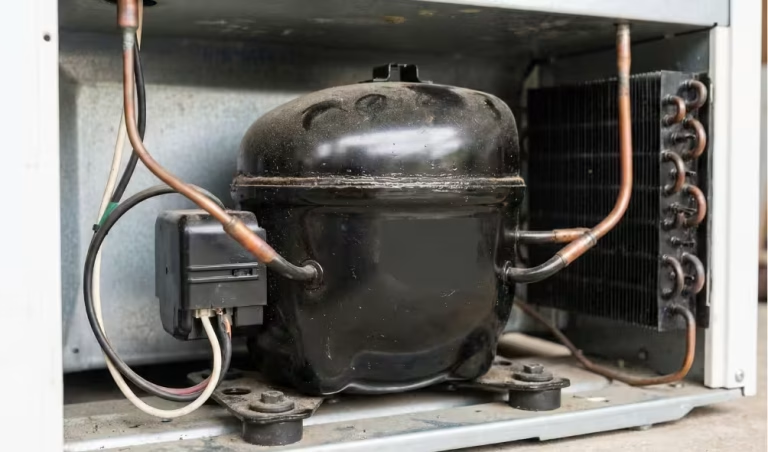
The sealed system isn’t complicated in design, but diagnosing it is. It’s a closed loop of:
Each part reacts differently under stress.
If your compressor is knocking, vibrating loudly, or too hot to touch, something upstream is stressing it out — usually airflow issues or high internal pressure.
I’ve walked into houses where the side walls of the fridge were almost hot enough to warm bread dough. That’s a sign of heat rejection failure, not always a bad compressor.
Dog and cat hair clog these constantly in Greenville homes. Restricted airflow means:
It feels like the fridge “dies,” but the compressor is simply shutting itself off to avoid burning out.
A frosted coil acts like a blanket. No air moves. Temperatures climb. The sealed system thinks it’s losing refrigerant when it’s actually suffocating.
Slow leaks are tricky — food cools “okay-ish,” but not great. Fast leaks pull air/humidity into the system and trigger:
Once air enters the system, it’s only a matter of time.
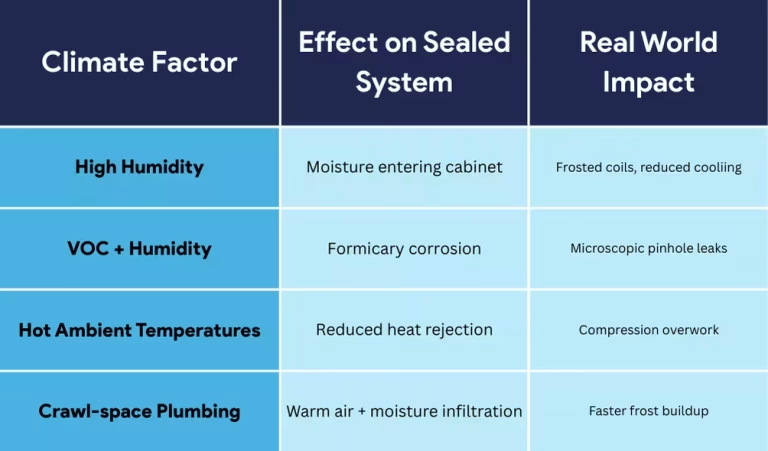
Sources: Greenville Climate Data, NOAA humidity reports, in-field sealed system diagnostics from Upstate SC homes.
You can catch these issues early if you know what to look for. Here are the big ones:
Freezer warms first. Fridge follows a few days later.
Knocking and buzzing usually mean mechanical strain.
When the sides of your fridge feel hot daily, the condenser can’t dump heat.
Door seal leaks are the #1 moisture source — easy to miss, easy to fix.
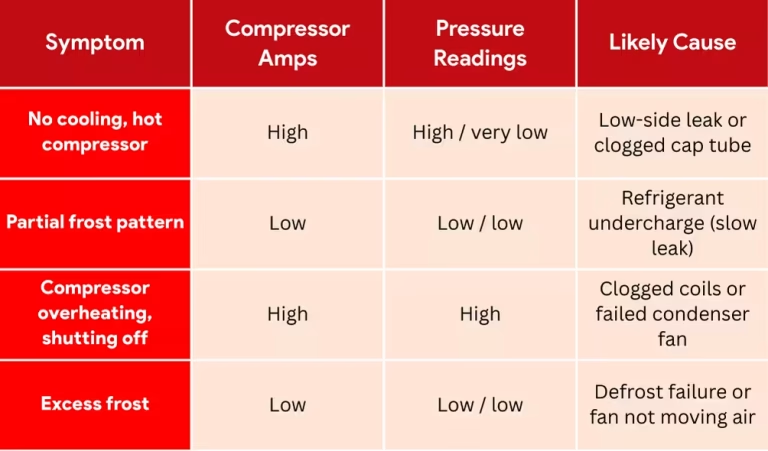
Sources: Manufacturer service data (Whirlpool, GE, Samsung), field measurements collected during Greenville sealed system repairs.
Truth: If the system is low, there is a leak. Period.
Truth: That’s a temporary patch. The leak must be found, drier replaced, system vacuumed, and charged by weight.
Truth: No. They require EPA certification, nitrogen purging, deep vacuum levels, and dedicated tools to avoid contamination.
I’ve seen dog hair so thick on condenser coils that it looked like a carpet. Cleaning coils lowers compressor strain immediately.
Humidity sneaks in through tiny gaps. Run the “dollar bill test” — if it slips out easily, replace the gasket.
Avoid storing strong cleaners, paints, or solvents near your fridge. VOCs (Volatile Organic Compounds) + humidity = copper corrosion.
Give your fridge breathing room. It can’t reject heat if it’s squeezed between cabinets.
If the repair cost is 50% or more of a new fridge — replacement usually wins.
Examples:
Use the lifespan rule too: most fridges last 10–15 years.
Why do sealed systems fail so much in Greenville?
Humidity + VOCs + hot summers create perfect conditions for corrosion and moisture intrusion.
Can I run my fridge in a garage here?
Only if heated in winter. Cold temps confuse thermostats and kill freezers.
Is a sealed system repair worth it?
Depends on age and cost. Use the 50% rule.
What’s the #1 preventable cause of sealed system failure?
Dirty condenser coils. Easy to fix, often ignored.
What’s the worst mistake homeowners make?
Letting a leak continue and repeatedly refilling refrigerant instead of repairing it.
Refrigerator sealed system failures aren’t random — Greenville’s climate puts these systems under constant stress. Humidity, heat, VOCs, and frost buildup work together to strain compressors, damage coils, and create leaks.
But when you understand the early signs, clean your coils, manage moisture, and choose a qualified technician when something’s wrong, you can dramatically extend your fridge’s lifespan.
And if you ever feel unsure — we’re right here in the Upstate, helping families avoid food loss, stress, and major repair bills.
Don’t stress. Appliance GrandMasters provides professional appliance installation and repair services to keep your appliances in top condition. Let our skilled technicians handle the work, ensuring your appliances run smoothly and efficiently. Contact us today for all your appliance repair needs in Greenville.
Get professional home appliance Repairs, maintenance & Installation now!
No worries! We’ve got you covered.
At Appliance GrandMasters, we’ve got your back. Let the experts handle it, so you can enjoy the convenience of smoothly running appliances without the DIY stress.
Our Appliance Repair & Maintenance Service Area
Greenville, Greer, Taylors, Simsponville, Mauldin, Easley, Pickes, Liberty, Pelzer, Williamston, Spartanburg, Honea Path, Belton, Piedmont, Travelers Rest, Wellford, Fountain Inn, Moore, Reidville, Duncan, Lyman, Boiling Springs, Inman, Campobello, Landrum
Formerly known as Mr. Rogers Appliances, we rebranded our appliance repair company to Appliance GrandMasters in June 2020. Since then, we have focused on developing our brand to be customer-oriented.
Fixing appliances has become a passion for us. We enjoy challenges, and we are always preparing and updating ourselves to become the very best.
We accomplish swift and top-notch service by employing efficient and friendly customer service procedures that guarantee accurate answers and solutions.
Our approach involves the careful selection and comprehensive training for the necessary skills to fulfill our customers’ needs. Through these strategies, we strive to consistently provide exceptional service.