

Appliance Repair Services

You Might be Using Your Microwave Oven Wrong: 5 Missuses & Best Practices

Why is my dryer still running?

If you’ve ever walked into the laundry room late at night and your dryer won’t stop spinning, it’s a weird mix of annoying and scary. You start wondering: Is it going to overheat? Am I wasting power? Do I have to babysit this thing until it stops?

I’ve seen this a lot in Greenville homes—townhomes off Woodruff, older houses near downtown, lake homes with long vent runs. Most of the time, the fix isn’t “mystical electronics.” It’s very real stuff: a stuck timer, a welded relay on the board, a confused moisture sensor, or a vent problem made worse by our humid Upstate climate.

In this guide, I’ll walk you through how the dryer is supposed to shut off, what usually goes wrong here in Greenville, which quick checks are safe for you to try, and when it’s time to call in a pro.

In case you missed it...

Key Takeaways

  • Most “won’t stop spinning” dryers are caused by stuck timers, welded relays, or confused moisture sensors, not “mystery software.”

  • Greenville’s humidity, power surges, and bird-clogged vents make these failures more common.

  • You can do simple checks (reset, door test, vent check) safely if you follow basic electrical precautions.
  • Anything involving live 240V, control boards, or internal wiring is not a DIY starter project.
  • If you’re in Greenville or the surrounding Upstate and this sounds like your dryer, Appliance GrandMasters can help you sort it out safely.

Important Safety Disclaimer
(Read This Before Doing Anything)

warning

Electric dryers run on 240 volts. That’s not “tiny phone charger” electricity. It’s enough to seriously hurt you or start a fire if something goes wrong.

Before you do any troubleshooting at home:

  • Unplug the dryer from the wall outlet. If it’s hardwired, flip the correct breaker fully off and label it so nobody flips it back on.
  • Don’t work alone if you’re not comfortable around electricity. Have someone nearby who can help in an emergency.
  • Never reach inside a running dryer or bypass safety switches (like the door switch) just to “test something.”
  • Let hot parts cool down. Control boards, heaters, and even the drum can get very hot. Give it 20–30 minutes.
  • Use the right tools. A basic screwdriver set and a flashlight are fine for homeowners. Leave multimeter testing, panel live-voltage checks, and wiring work to a trained tech.
  • If something smells burned, sparks, or trips the breaker repeatedly, stop. That’s a “call a professional now” moment, not a “one more YouTube video” moment.

If any of this makes you nervous, that’s your sign to skip the DIY and schedule a service call instead of pushing your luck.

How your dryer is supposed to stop

clothes dryer

Let’s translate the tech talk into normal language.

Most dryers shut down in one of two ways:

  1. Timed dry – A small motor slowly turns a mechanical timer or advances digital time in the control board. When the timer reaches “Off,” it cuts power to the drive motor and heat.
  2. Sensor (Auto Dry / Sensor Dry) – The dryer watches moisture and temperature. Tiny metal bars inside the drum sense when clothes are dry enough. Once the control board sees “dry,” it starts a cool-down, then cuts power to the motor.

Inside, this all runs through a “traffic controller”—either a mechanical timer or an electronic control board. That controller feeds power to the motor, heater, and sensors, then takes it away when the cycle is done.

When your dryer won’t stop spinning, what’s usually happening is:

  • The control can’t finish the cycle, or
  • It finishes on the display, but the motor circuit is still stuck “ON” somewhere.

Think of it like a light switch that says “Off”… but the light stays on because the inside of the switch is welded shut.

Top reasons a dryer won’t stop spinning in Greenville, SC

1. Stuck mechanical timer (older & budget models)

On older Whirlpool-style dryers and plenty of budget models, a little motor turns a mechanical timer full of cams and metal contacts. Over years of use, those contacts open and close under load and can eventually arc and weld together, especially on circuits that see a lot of heat and humidity.

I’ve opened timers in Greenville homes and found contacts literally fused in the “ON” position. In some brands, a bad timer like this shows up in about half of “won’t stop spinning” calls.

What you’ll notice at home:

  • The timer dial reaches “Off” but the drum just keeps spinning.
  • Sometimes the dial stops moving altogether, but the drum still runs until you open the door or kill power at the breaker.


There’s no safe way for a homeowner to repair the inside of a timer. In real life, we diagnose it with a meter and replace the timer as a complete part.

2. Stuck motor relay or fried control board (modern dryers)

Most Samsung, LG, GE, and newer Whirlpool dryers use an electronic control board instead of a timer. On that board is a small motor relay—a little clicky switch that turns the motor on and off.

In Greenville, two things love killing these relays:

  • Humidity and condensation inside the cabinet, which corrodes solder joints and relay contacts.
  • Voltage spikes and “loose neutral” power issues on our local grid, which can fuse the relay closed in one shot.

When that relay welds shut, the control board might think it has turned the motor off, but the relay keeps feeding power to the motor anyway. You’ll get cycles that “finish” on the display, lights that shut off… and a drum that just keeps rolling until you open the door or unplug it.

Some folks try the “Fonzie tap”—banging the console to unstick the relay. I’ve seen it work once or twice as a temporary fix, but it’s like kicking a bad starter in your car: if it works, it’s still telling you that part is on borrowed time. A welded relay means the board needs replacement.

3. Moisture sensor confusion (dryer sheets, lint, and Greenville humidity)

Most dryers with “Sensor Dry” use two metal bars inside the drum to measure how wet your clothes are. Wet laundry bridges those bars and lets a tiny signal pass between them. As clothes dry, the signal drops and the control decides it’s time to stop.

Here in the Upstate, I see three things that mess this up:

  • Dryer sheets leaving a waxy coating on the bars, so they can’t read moisture correctly.
  • Lint and gunk building up behind or across the bars, creating a fake “always wet” signal.
  • High humidity in the laundry room, where moist air + lint becomes a slightly conductive paste inside the cabinet.


What this looks like at home:

  • On “Sensor Dry,” the dryer runs for hours instead of a normal cycle time.
  • On “Timed Dry,” it behaves better, which is a big clue the sensor system is the problem.


As a tech, I’ve wiped off sensor bars in Greenville houses that were gray and dull from years of dryer sheets. A quick scrub with rubbing alcohol brought them back, and the “never-ending” cycles stopped immediately.

4. Thermostats and “auto-dry” logic getting stuck

Dryers also lean on thermostats to know when to move from heating to cool-down and then “Off.” A bad cycling thermostat or cool-down thermostat can confuse the control logic.

If the thermostat never tells the dryer, “Hey, we hit temperature,” the control may just keep the motor running, waiting for a condition that never comes. In some models that means endless tumbling; in others, scorching hot cycles that take way too long.

This is one of those areas where you really want a pro with a meter and the service manual. Guessing at thermostats and just swapping parts is how people waste money and still end up with a dryer that won’t shut off.

5. Vent, pests, and the Greenville environment

This is the part most folks don’t expect.

In the Greenville / Upstate area, I see a lot of termination failures (dryers that won’t stop) linked to our environment:

  • Bird nests in the exhaust vent – Starlings love warm, sheltered vents. A clogged vent traps hot, moist air in the drum, so the moisture sensor keeps reading “still damp” and the dryer keeps running.

  • Palmetto bugs and rodents in the cabinet – Roach droppings are slightly conductive and can bridge connections on control boards or relays, making the dryer think it should keep running. Rodents sometimes chew door-switch or motor wires so the safety circuits are bypassed.

  • High humidity in laundry rooms and crawlspaces – Moisture + lint = conductive mush that can short sensor circuits or corrode board traces over time.

I’ve opened dryers in Greenville and literally found a bird nest in the vent hood and a layer of damp lint plastered over the moisture sensor wiring. After clearing the vent and cleaning the sensor circuit, the dryer went back to normal cycles.

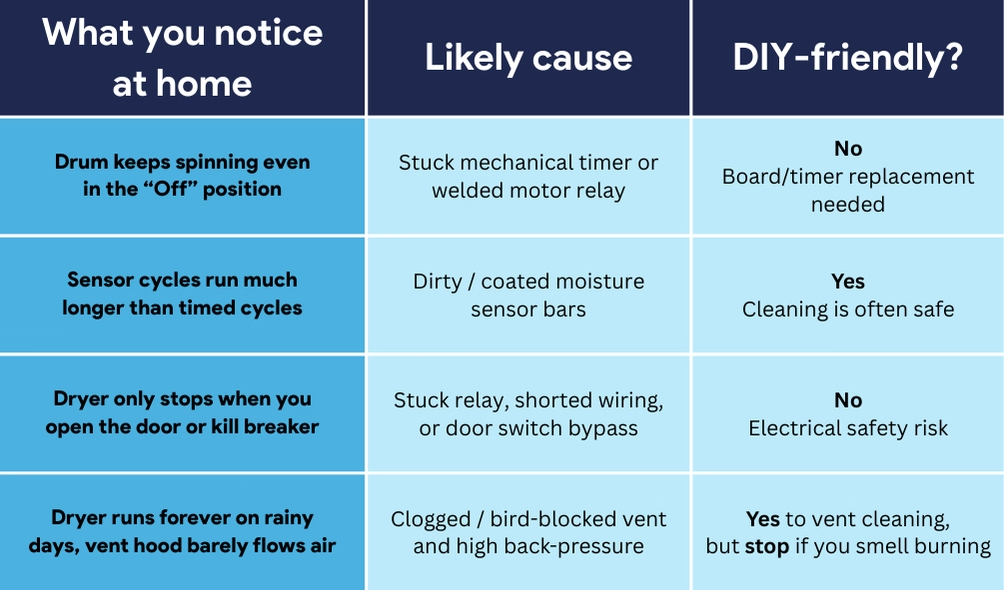
Quick symptom cheat-sheet

Here’s a simple way to connect what you see at home to the kind of problem we often find in the field:

5-minute checks many Greenville homeowners can try

If you’re comfortable and have already followed the safety steps, here are simple checks I walk Greenville customers through all the time over the phone:

  • Do a full power reset. Unplug the dryer (or flip the breaker) for 10–15 minutes, then plug back in. If it starts spinning as soon as power is restored, even without pressing Start, that strongly points to a welded relay or serious board problem.

  • Test the door switch the safe way. With power restored, start a cycle and then open the door. The drum should stop instantly. If it keeps turning with the door open, stop right there and call for service—that’s a safety system failure, not a DIY project.

  • Check the vent outside. Go outside while the dryer is running. You should feel a strong, warm stream of air at the vent hood. If the flap barely opens, or you see bird nesting material, kill power and have the vent cleaned before you run the dryer again.

  • Clean the moisture sensor bars. Unplug the dryer, find the two small metal strips inside the drum (often by the lint housing), and gently scrub them with a soft cloth and a bit of rubbing alcohol. Let them dry, then test a Sensor Dry cycle again.

  • Look around the laundry room. If your laundry area feels swampy in summer, consider a small dehumidifier. Keeping humidity under about 50% helps all your electronics live longer, not just the dryer.

If you’re doing any of this and something feels off—burned smells, buzzing, visible arcing—stop immediately and call a technician.

DIY disclaimer: know the line between smart and risky

I love when homeowners understand their appliances. I also see, way too often, the point where DIY crosses into danger:

  • Bypassing door switches “just to test”
  • Shoving wires back into a harness “until they stay”
  • Replacing control boards without checking for the surge or short that killed the first one


A dryer that won’t stop spinning can overheat, waste power, or—in worst cases—be a fire risk if the thermostats or safety systems are compromised. And remember, we’re dealing with 240V circuits, condensation, and sometimes damaged wiring inside a metal box.

So here’s the honest line from a Greenville tech:
If your simple checks don’t clearly solve the problem, or if you’re ever unsure, it’s safer and cheaper in the long run to bring in someone who works on these systems every day.

When to call a professional in Greenville, SC

When to call a professional in Greenville, SC

It’s time to schedule a service call when:

  • The dryer keeps spinning even with the door open.
  • It starts running as soon as you plug it in or flip the breaker.
  • You see error codes, smell burning, or feel the cabinet sides getting unusually hot.
  • You’ve cleaned the vent and sensor bars, but sensor cycles still run excessively long.


A good local technician will:

  • Check power and grounding (important with Duke Energy’s occasional voltage swings).
  • Test the timer or control board, moisture sensors, thermostats, and door switch with proper tools.
  • Inspect the vent for back-pressure, birds, and lint buildup.
  • Look for signs of pests, corrosion, or moisture damage inside the cabinet.


In many cases, catching this early is the difference between a reasonable repair and a burnt board plus other collateral damage.

If you’re in Greenville, Greer, Simpsonville, Taylors, Travelers Rest, or the surrounding Upstate, our team at Appliance GrandMasters deals with these dryer problems every single week. You can learn more about who we are on our About page and schedule service through our Contact / Schedule page or Call Us.

FAQs

Why won’t my dryer stop spinning even when the timer says “Off”?

Most of the time it’s either a stuck mechanical timer or a welded motor relay on the control board. The timer or relay is still feeding power to the motor even though the knob or display says the cycle is done. That’s not something you can normally fix with a button press. It usually needs a proper diagnosis and part replacement.


Is it safe to leave a dryer running if it never stops on its own?

I would not treat that as safe. A dryer that refuses to shut off is telling you something in its control or safety circuit isn’t doing its job. The longer it runs, the more heat and wear you’re stacking up on the motor, heater, wiring, and vent. In a humid place like Greenville, where vents already work harder, that’s just asking for trouble. Until it’s checked, unplug it or flip the breaker when you’re not actively using it.


Can I fix a stuck dryer timer or bad relay myself?

Swapping parts inside the console looks simple online, but you’re still dealing with live 240V circuits, wiring harnesses, and boards that can be ruined by one wrong move. If you don’t already own and know how to use a multimeter, this is not the project to learn on. Most Greenville homeowners are better off letting a tech test the timer or board and replace it safely.


Can a clogged vent really make my dryer run too long?

Yes, absolutely. A restricted vent means hot, wet air can’t escape like it should. The dryer keeps sensing “still damp,” especially on Sensor Dry cycles, so it just keeps tumbling. Around Greenville, bird nests, long vent runs, and lint “sludge” from our humid air are a big part of why dryers seem to run forever. Cleaning the vent can fix both drying time and safety at the same time.


How do I know if it’s a sensor issue or a control problem?

Here’s a simple way to feel it out at home: if Sensor Dry runs way too long but a Timed Dry setting behaves normally, that points more toward dirty or coated moisture sensor bars. Cleaning those bars with a little rubbing alcohol often helps. If the dryer ignores both the timer and sensor settings, runs past “Off,” or starts spinning the moment you power it up, that’s more likely a timer, relay, or board issue.


When should I just replace the dryer instead of repairing it?

If the dryer is older, has multiple problems (like control issues plus bad heat or noise), or the repair estimate starts creeping over half the cost of a decent replacement, it’s worth talking about a new unit. For newer dryers in Greenville that only have one clear problem—like a bad board, timer, or relay—repair often makes more sense, especially if the rest of the machine is in good shape and the venting is corrected at the same time.
Final Thoughts

A dryer won’t stop spinning issue feels like a small annoyance until you realize it’s your machine telling you, “Hey, something in my brain or safety system isn’t right.” In Greenville’s humid, storm-prone environment, ignoring that message can mean higher bills, ruined clothes, or premature board and motor failures.


If your dryer is acting like it wants to run a marathon instead of a normal cycle—and you’re in the Greenville, SC area—reach out to
Appliance GrandMasters. We’ll track down the real cause, fix it safely, and get your life (and your laundry) back to normal so your dryer won’t stop spinning problem becomes a one-time story, not a recurring headache.

Follow us on our Official Social Media

Expert Appliance Repairs

Don’t stress. Appliance GrandMasters provides professional appliance installation and repair services to keep your appliances in top condition. Let our skilled technicians handle the work, ensuring your appliances run smoothly and efficiently. Contact us today for all your appliance repair needs in Greenville.

Get professional home appliance Repairs, maintenance & Installation now!

No worries! We’ve got you covered.
At Appliance GrandMasters, we’ve got your back. Let the experts handle it, so you can enjoy the convenience of smoothly running appliances without the DIY stress.

Our Appliance Repair & Maintenance Service Area

Greenville, Greer, Taylors, Simsponville, Mauldin, Easley, Pickes, Liberty, Pelzer, Williamston, Spartanburg, Honea Path, Belton, Piedmont, Travelers Rest, Wellford, Fountain Inn, Moore, Reidville, Duncan, Lyman, Boiling Springs, Inman, Campobello, Landrum

About Appliance GrandMasters

Formerly known as Mr. Rogers Appliances, we rebranded our appliance repair company to Appliance GrandMasters in June 2020. Since then, we have focused on developing our brand to be customer-oriented. 

Fixing appliances has become a passion for us. We enjoy challenges, and we are always preparing and updating ourselves to become the very best.

We accomplish swift and top-notch service by employing efficient and friendly customer service procedures that guarantee accurate answers and solutions. 

Our approach involves the careful selection and comprehensive training for the necessary skills to fulfill our customers’ needs. Through these strategies, we strive to consistently provide exceptional service.